
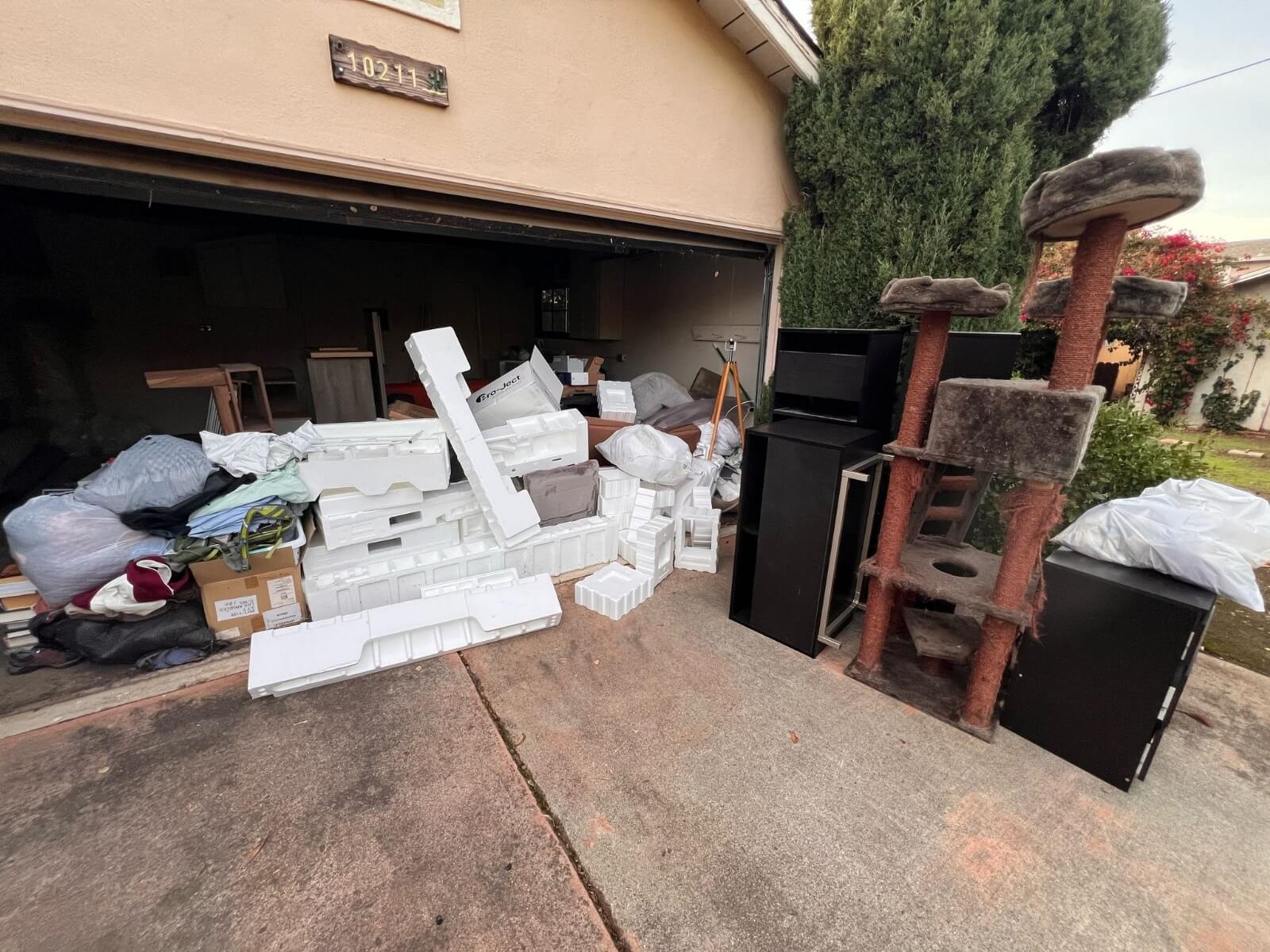
Most garage cleanouts get planned three or four times before they happen. The weekend arrives, somebody opens the door, looks at twelve years of accumulated storage, and the project quietly moves to next month.
This guide covers what a garage cleanout actually involves, how long it really takes, when doing it yourself is the sensible choice, and the six signs that it is worth bringing in help.
Key Takeaways
- A garage cleanout is mostly a decision-making job. The physical work is the easy half.
- Sorting into four piles before anything leaves is what keeps a one-day job from becoming a three-weekend project.
- Hazardous items such as paint, oil, fuel, and pesticides cannot be taken by a junk hauler and need to be separated first.
- Doing it yourself works for a partial clearout with light items and a vehicle you already have.
- Overhead storage, heavy items, and a hard deadline are the three clearest signals that professional help is worth considering.
What a Garage Cleanout Actually Involves
Whether you do it yourself or hire a crew, the sequence is the same. It is worth seeing it laid out because the order matters more than people expect.
| Step | What Happens |
|---|---|
| 1. Decide the scope | Everything comes out, or everything except a defined set of items you are keeping. This single decision determines how long the whole job takes. |
| 2. Separate hazardous items | Paint, oil, fuel, pesticides, propane, and batteries go to one side before anything else starts. These items require separate disposal arrangements. |
| 3. Sort into piles | Keep, donate, recycle, and dispose. The four-pile method is explained below. |
| 4. Clear a path | Work from front to back so items can move out without being handled twice. |
| 5. Load and remove | The physical part, and usually the shortest part if the first four steps were completed properly. |
| 6. Sweep | Finish by sweeping the garage floor and leaving the cleared space ready to use. |
How Long Does a Garage Cleanout Take?
Honestly, longer than you think if you are doing it alone, and less than you think with a crew.
The reason is not strength; it is decisions. A homeowner clearing their own garage stops at every third item because every item has a small story attached to it. A crew working to a decision you already made does not stop at all. The same garage that takes a household two full weekends may take a two-person crew a few hours, depending on the amount of clutter and the work involved.
If you are doing it yourself, a realistic planning assumption for a full double garage is two days of work, plus at least two trips to dispose of what comes out.
The Four-Pile Method
This is the simplest system that works. One reason garage cleanouts stall is that people skip sorting and try to make every decision while loading the vehicle.
| Pile | What Goes in It | Where It Ends Up |
|---|---|---|
| Keep | Things used in the last two years, seasonal items you genuinely use, and tools in working order. | Back on a shelf, ideally with a designated home rather than a space on the floor. |
| Donate | Furniture, tools, sports equipment, and household goods in working, saleable condition. | A local charity or donation center that accepts the items. Check its requirements first. |
| Recycle | Metal shelving, bicycles, cable, clean cardboard, and electronics. | Appropriate scrap-metal and electronic-waste recycling facilities. |
| Dispose | Broken, damp, moldy, incomplete, or obsolete items that cannot reasonably be reused or recycled. | An appropriate disposal facility. This is often the largest pile, and people underestimate it every time. |
There is a fifth pile, and it does not go in the truck. Paint, solvents, motor oil, fuel, pesticides, pool chemicals, propane cylinders, and car batteries may require household hazardous waste disposal. Set these items aside at the start and arrange disposal through an appropriate local facility. Do not place them in a regular junk removal load.
When Doing It Yourself Makes Sense
There are four situations where handling the cleanout yourself is genuinely the better choice.
- It is a partial clearout. You are tackling one corner, one shelving unit, or one category of items rather than the entire garage.
- The items are light. Boxes, clothing, plastic storage containers, and cardboard are manageable without heavy lifting.
- You already have a suitable vehicle. You have a truck or van you are not renting and a suitable place to take the unwanted items.
- There is no deadline. You can spread the work over several weekends without anything depending on the garage being cleared by a particular date.
Six Signs It Is Worth Hiring Help
1. There Is Storage in the Rafters
Overhead storage is one of the most commonly underestimated parts of a garage. Accessing it may require a ladder and another person, and it is often where heavy, long-forgotten items are stored. Avoid climbing or lifting overhead items alone if doing so could put you at risk.
2. There Are Items You Cannot Lift Alone
A workbench, a treadmill, a spare refrigerator, a motorcycle frame, a safe, or sheets of plywood can be difficult to move safely. If an item requires a second person or special handling, hiring an experienced crew can make the job easier and reduce the risk of injury.
3. You Have a Date to Hit
A move, a closing, a tenant arriving, or a contractor needing the space can turn a garage cleanout into a time-sensitive project. A job that must be finished by a specific day is different from one that can drift across several weekends.
4. The Volume Is Beyond One or Two Loads
Once you need to rent a vehicle and make three or more disposal trips, both the cost calculation and the time commitment change. Getting a junk removal quote can help you compare the total cost of doing it yourself with hiring a crew.
5. It Has Been Full for More Than Five Years
Garages that have been used for long-term storage often hold more than anyone remembers. The back third is usually worse than the front two-thirds suggest, and years of accumulated items can make sorting and hauling a much bigger project than expected.
6. The Physical Work Is Not Realistic
A bad back, a recent injury, limited mobility, or simply not wanting to spend two days carrying boxes are all valid reasons to get help. You do not need to justify hiring a crew when the work is too demanding or time-consuming to handle yourself.
What to Do the Day Before
Half an hour of preparation can save a meaningful amount of time on cleanout day.
- Mark what is staying. Use tape, cover the items, or move them to one side. Making every decision on the day is one of the main reasons a job runs long.
- Pull out the hazardous items. Separate paint, oil, chemicals, and propane cylinders. These need different disposal arrangements, and finding them in the middle of loading slows everything down.
- Open a path to the back wall. Clearing an access path allows loading to begin without an hour of shuffling items around.
- Move the car. It sounds obvious, but it is easily forgotten. The crew needs access to the garage and driveway.
- Check the shelving. Decide whether built-in units, racking, and the workbench are staying or going. Dismantling them is additional work that should be discussed when requesting a quote.
What We Take and What We Cannot Take
Items We Can Take
We can help remove boxes, old furniture, appliances, electronics, bikes, exercise equipment, garden tools, lumber offcuts, shelving, carpet, toys, sports gear, and general household storage. Contact us if you have an unusual or particularly heavy item so we can confirm whether it can be handled.
Items We Cannot Take
Paint, solvents, motor oil, antifreeze, fuel, pesticides, pool chemicals, propane cylinders, car batteries, and medical waste may require specialized disposal and should not be included in a standard junk removal load. These items need to be handled through the appropriate hazardous waste or specialist disposal service.
Separate restricted items beforehand so the rest of the cleanout can proceed smoothly. If you are unsure whether something can be removed, send us a photo before the scheduled day and we will confirm what arrangements may be needed.
Frequently Asked Questions
How Long Does a Garage Cleanout Take?
Many single-car garages can be cleared in a few hours, while larger double garages may take longer depending on the volume, access, and type of items. If you are doing it yourself, plan on two days plus disposal trips for a full double garage. The difference often comes down to decision-making, loading, and transportation rather than physical labor alone.
Do I Need to Be There?
Not necessarily, provided the crew can access the garage and you have agreed on the price and identified what is staying beforehand. Marking the items you want to keep and communicating your instructions clearly can make it possible for the crew to complete the work while you are away. Confirm access arrangements when booking.
Will You Take the Shelving and the Workbench?
These items may be removable, including some fixed units, but tell us about them when you book. Dismantling built-in shelving, racking, or a workbench involves additional labor that should be included in the quote rather than discovered on the day.
What About the Paint and Chemicals in the Corner?
These items cannot be included in a standard junk removal load. Paint, solvents, oil, fuel, pesticides, and pool chemicals may be hazardous waste and need to go to an appropriate household hazardous waste facility. Set them aside and arrange separate disposal before the cleanout.
Can You Come at the Weekend?
Weekend appointments may be available, but they are often in high demand. Contact The Top Junk about availability and book ahead where possible rather than waiting until the day you want the garage cleared.
What Happens to Everything Afterwards?
Where facilities and item condition allow, usable furniture, tools, and household goods may be directed toward local charities or donation outlets. Suitable metal and cardboard can be recycled, and electronics can be taken to appropriate electronic-waste processors. Items that cannot be reused or recycled are disposed of through suitable facilities. Actual outcomes depend on the materials and available receiving facilities.
Clearing a Garage in Campbell
The Top Junk clears garages across Campbell and the South Bay. We handle the lifting, including items stored overhead where safely accessible, provide a price before work begins, and sweep the floor before leaving, where appropriate.
Junk removal starts at $120 for small loads, and a full garage is quoted based on the space it takes up in the truck and the work involved. Send a few photos, including one of the back wall, so we can better understand the job and provide a price.
Call or text (669) 327-6688, or see our garage cleanout service to learn more about what the job includes.
For a clearer idea of the cost, learn how your cleanout is quoted based on the space it takes in the truck.